I set out to illustrate how the famous fantasy saga The Lord of the Rings addresses issues at the heart of the environmentalist movement today. To do that, I first needed first to describe what I meant by “the modern environmentalist movement,” the audience that I hope will one day read the book. The quest brought me into a quagmire of history and theory, but has ultimately helped to create a meaningful throughline for Where the Roots Are Long: The Lord of the Rings and the Modern Environmentalist Movement.
Expanding scope
In blissful naïveté, I initially decided to keep the focus on the people and events of the 21st century. After all, my audience was the people working today to stem and reverse carbon pollution, conserve pristine wilderness, combat pollution and waste, and so on.
I soon came to understand that this would be cutting the story of environmentalism short. Most people place the beginning of the “modern” environmentalist era in 1962, with the publication of Silent Spring by Rachel Carson. I decideded that I would stretch just a bit further back than I originally intended, back through Deep Ecology and Social Ecology, through The Limits to Growth, through the Chikopo movement of the 1970s to the “founding event” of Carson’s work that awakened widespread popular mobilization. Yes, I decided. Starting the story in the 60s would set the stage for today’s actors nicely.
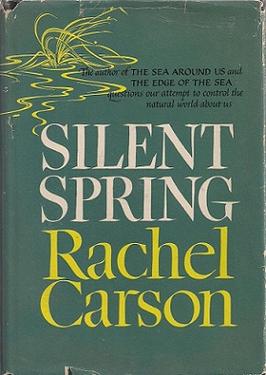
But even this was too abridged, I suddenly realized. After all, Tolkien himself lived to 1973. Was I really going to leave environmentalists from his era out of the picture? To do a thorough job, I had better cover the 20th century as well, especially in England, especially in the World Wars which shaped Tolkien’s life and laid the foundation for modern industrial agriculture.
That phrase. “Industrial” agriculture. It’s a common name for the chemical-based, monocrop, mass production approach to growing food and just one permutation of the Industrial Revolution that began in England in the 1700s and spread around the world. Any meaningful history of environmentalism, particularly as it relates to this novel — written by an Englishman, about great powers that consume forests and rivers to power production — surely must cover the Industrial Revolution.
Oh yes, and that regard of nature as a resource to be consumed? Well, influential Christian writers of the 20th century placed the blame for that idea all the way back in Genesis and God’s commandmants to humanity to “fill the earth and conquer it”. [1] Scholars have written how Tolkien’s faith shaped his environmental ethic and at least a brief forray into this history of Christian, particularly Catholic, environmental philosophy on nature was probably in order. And don’t forget, environmentalism is a global story; I can’t repeat the sin of treating the West as the only field where this better.
So, I concluded, I’d better broaden the scope of the book to “the dawn of time and every culture on Earth”. That ought to cover it.
“A nice pickle we have landed ourselves in,” as Sam Gamgee might say.
Discovering throughlines
Scope creep and endless connection pondering are typical problems for a first-time history writer. In the design space, the solution is often to adopt a “diamond” approach to thinking. It’s fine, even encouraged, to think expansively as long as one can then ruthlessly narrow the scope to focus on the core issue.
”To write a global history of anything, let alone a complex and widespread phenomenon as environmentalism, is to be savagely selective,” says Ramachandra Guha. [2] For better or for worse I have set the bounds of my historical perspective at the Industrial Revolution as the seed of Tolkien’s own environmental concerns, and while I have tried to learn about many different environemental actions around the globe and across time, my goal has been to find strong linking threads, rather than catalog everything.
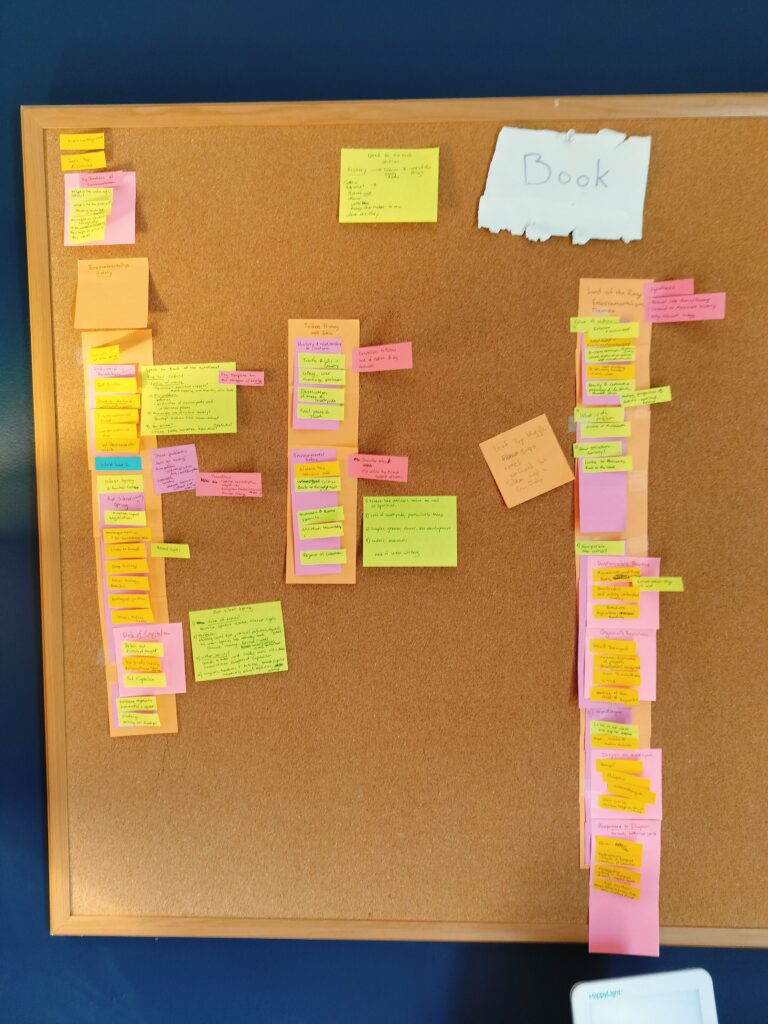
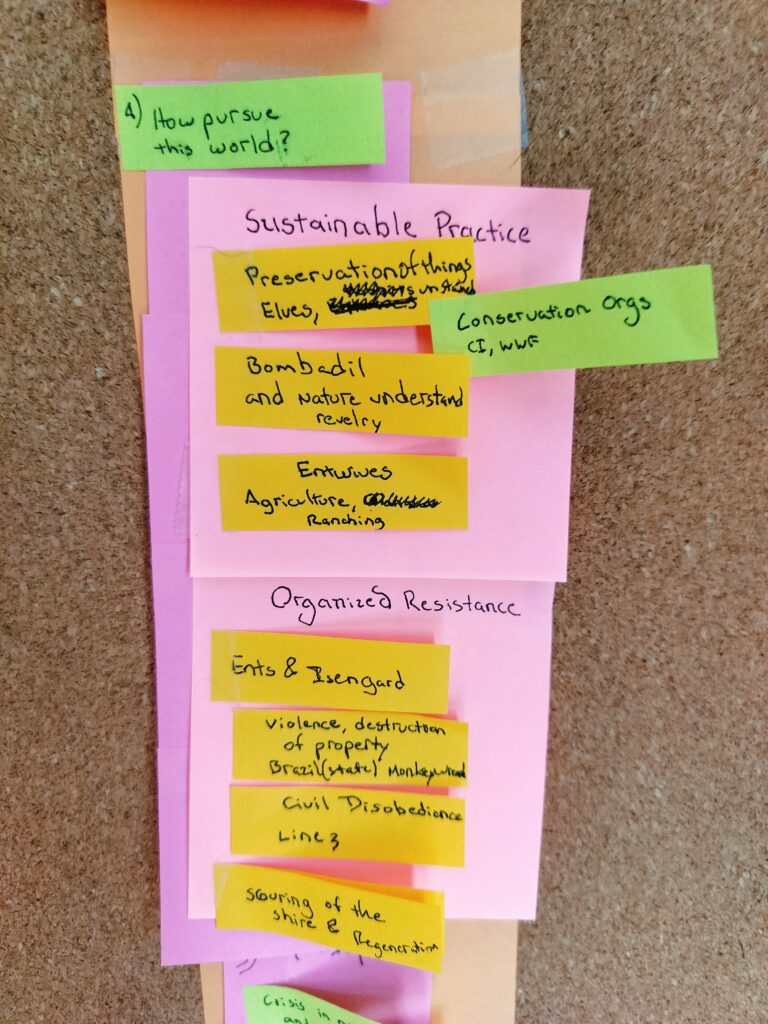
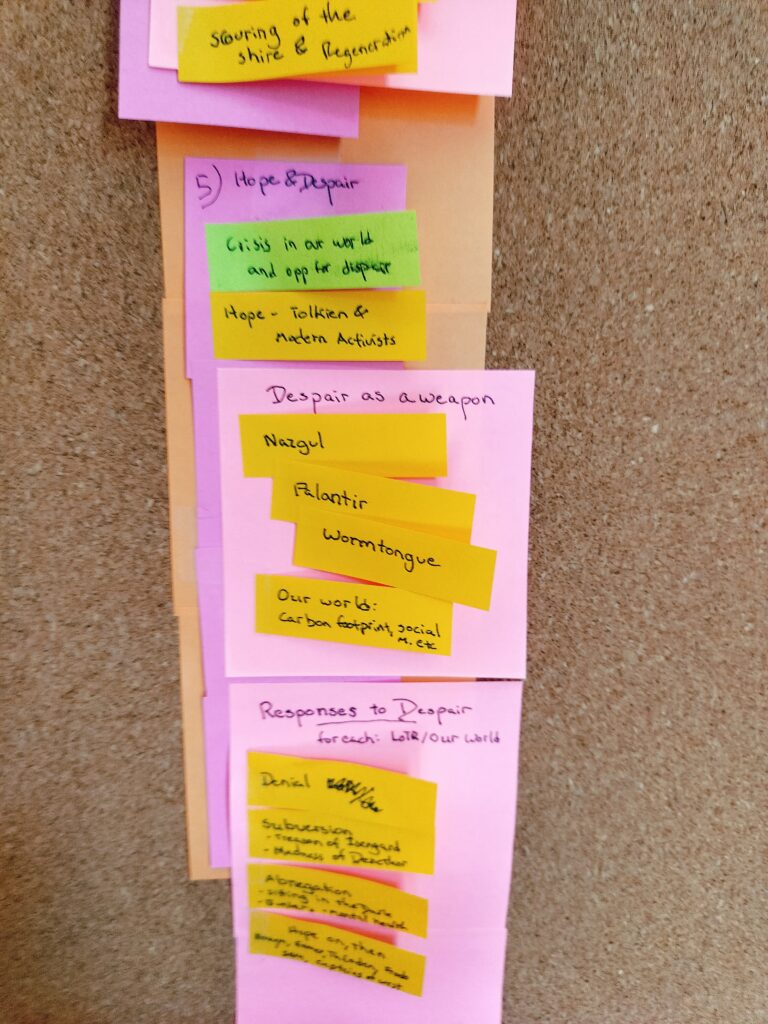
This is a book about The Lord of the Rings. Everything must have a connective tissue to that story. And yet, with this vast community of environmentalists across time and space, how can any novel written in the 1950s be credibly be tied to so many people, especially the extremely modern concerns of climate change?
To bridge the gap between past and present, and between reality and fiction, and between philosophies and actions, I’ve established four throughlines that connect every section. When I examine people, books, or characters, I try to understand at least four things:
- What is the value of nature?
- What is/are the environmental problems of the moment?
- How ought we to structure society to address those problems and live well?
- How ought we to pursue this society?
With these questions in mind, I can link remote people and ideas into a similar thread. For example, when looking at the nature of the environmental crisis of the moment, one can see sadly identical expressed acrosss writings each separated by 70 years:
- John Ruskin (1876) in England condemning the exension of railroads: “the frenzy of avarice… poisoning our children, and blasting the cultivable surface… into a treeless waste of ashes” [3]
- J.R.R. Tolkien (1955), in the Shire, through the Hobbits mourning a “new mill in all its frowning and dirty ugliness: a great brick building straddling the stream, which it fouled with a steaming and stinking outflow”. “… they pour out filth a purpose; they’ve fouled all the lower Water, and it’s getting down into Brandywine. If they want to make the Shire into a desert, they’re going the right way about it.” [4]
- Madhuri Mandava (2025) in India, decrying the pollution destroying downstream agriculture: “…the river foams. She is churning mix of sewage, industrial effluents, and chemicals which makes her froth… The farmers who rely on it have little choice, and even less voice.” [5]
So, the book has once more changed shape. But I’m confident this new form helps me make a better case for the linkages between Tolkien’s saga and the great struggle of our time.
Sources
[2] Guha, Ramachandra. Environmentalism: A Global History. Longman World History Series. Longman, 2000.
[3] Ruskin, John, The Extension of Railways in the Lake District by Robert Somervell
[4] Tolkien, John Ronald Reuel. The Return of the King: Being the Third Part of The Lord of the Rings. Harper Collins Publishers, 2005.
[5] Madhuri Mandava, The Story of Forgotten Rivers (Paani Earth)



Leave a Reply